06 · Dress as a dialect
Colour after black
In this city, fabric is speech. You can decline a conversation with charcoal. You can start one with amber.
Mourning, then permission
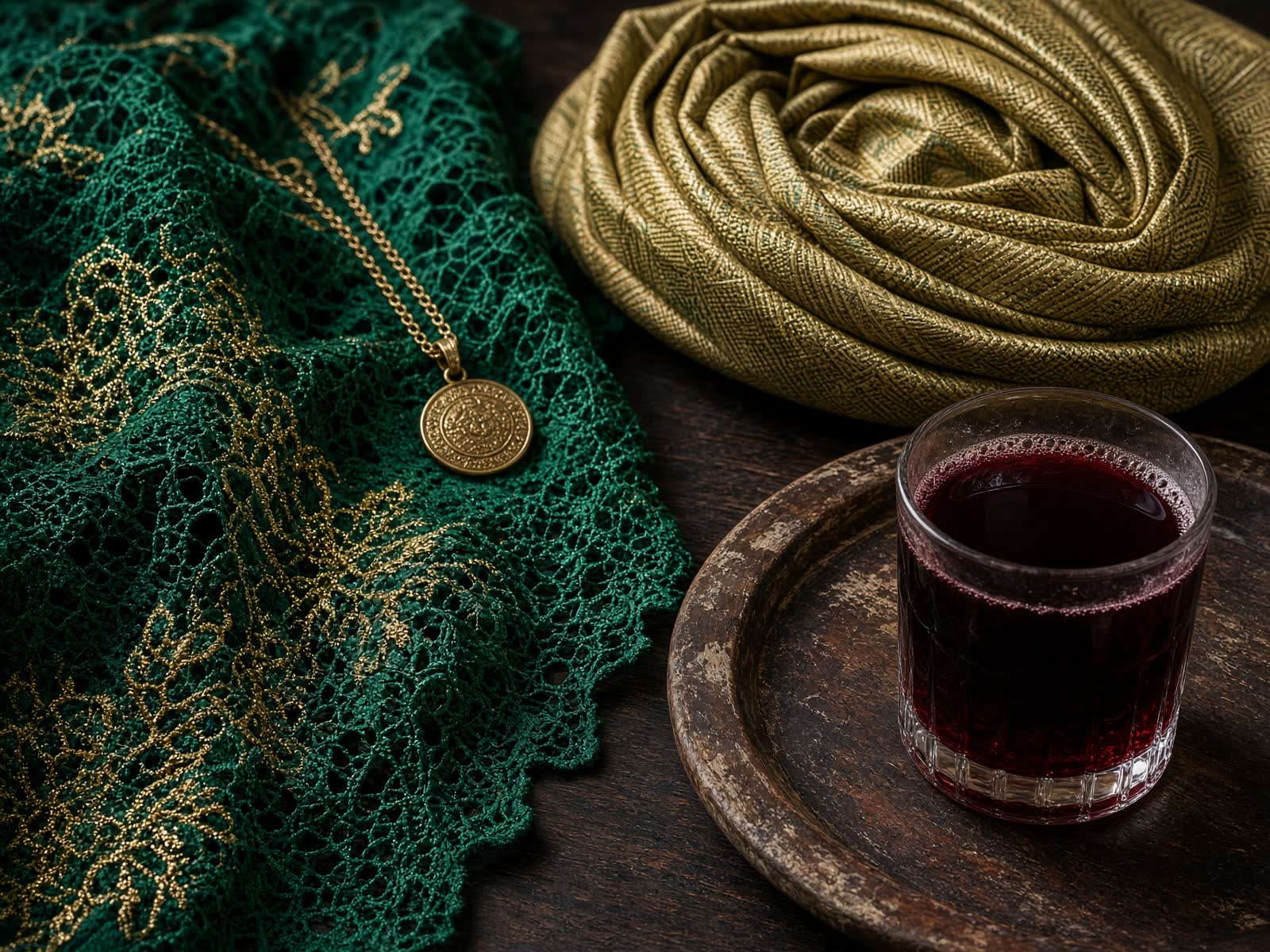
Black abayas in a faithful row are not always performance. Sometimes a woman simply cannot reach past them. The first colour after ihdad — a deep amber with a gold thread her mother chose in an Abuja market years ago and she never wore — is not fashion. It is a decision to live, made in a wardrobe, before anyone else is allowed to see it.
Children notice. An eight-year-old can be enlisted by an aunt in Ghana as part of a coordinated campaign: wear the amber one. You know which. Dress here is never only personal.
The grammar
Men: babban riga, kaftan, kube cap, embroidery that is exact rather than loud. Stillness as style. Oud as a signature some people have worn for twenty years without discussing it.
Women: lace weight, gele height, the off-shoulder that has been negotiated with the self and found acceptable. Emerald guipure. Burnt orange French lace. A gele left alone after two adjustments is a mother’s highest form of approval. At the other end of the register: a face cap and a full hijab as elite anonymity — two people who can afford to be known, choosing not to be, in a dim restaurant.
Rooms remember before people admit it
Walk into a society wedding in colour after months of black and the room feels it — not as an entrance designed to be felt, but as the return of a woman rooms used to notice. Some embrace. Some simply move aside. Both are information.