04 · Architecture that decides behaviour
The compound as social machine
A Kaduna compound is not just a house. It is a set of rules made of walls, gates, and who may cross a corridor.
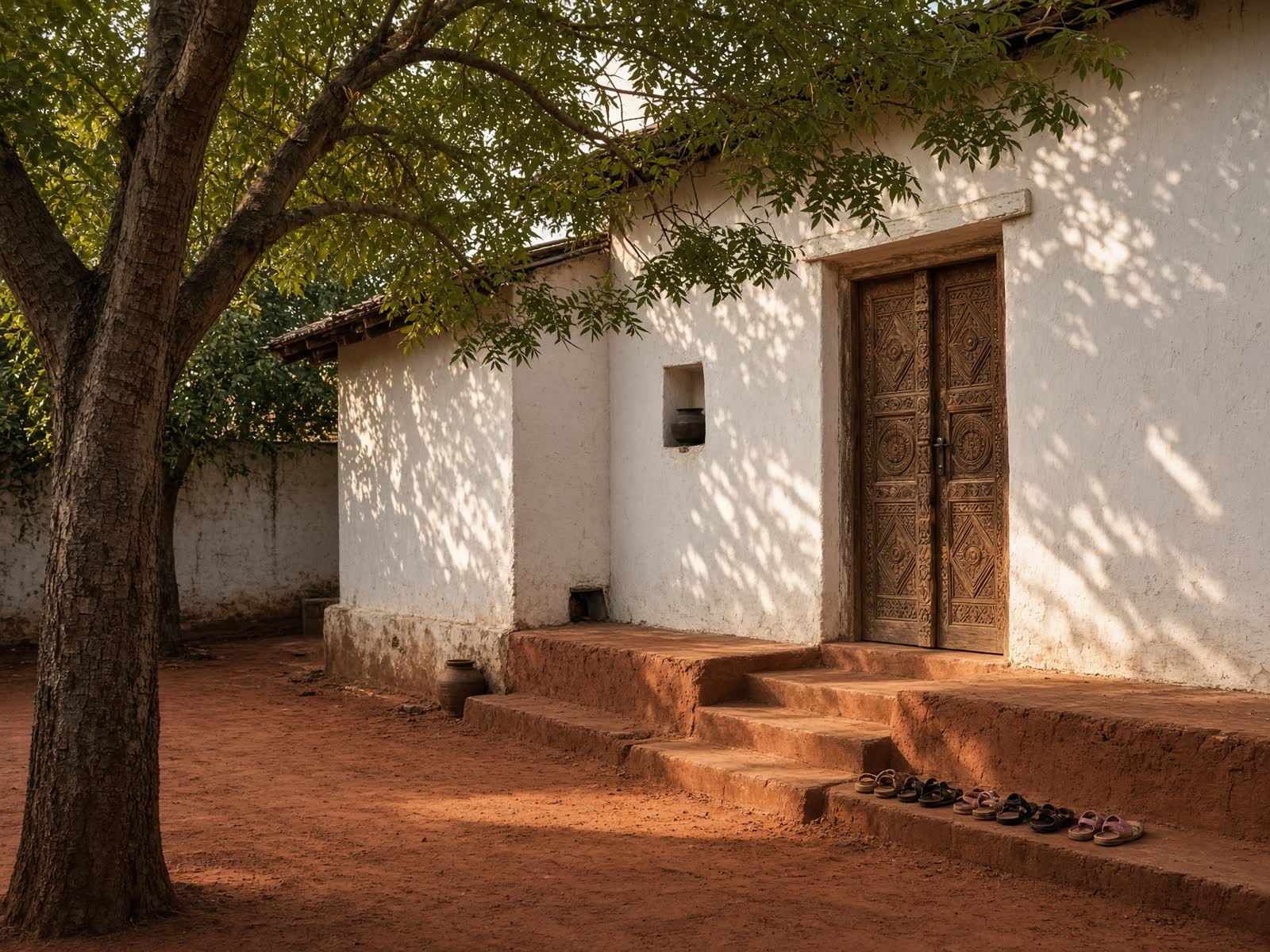
Gate, courtyard, rooms
The gate is the first interview. Who watches it, how quickly it opens, whether the houseboy leads you to the formal receiving room or the family sitting room — these are already answers. Children’s sandals by the step, a bicycle, a neem tree: the public evidence of a household that is alive.
After a death, rooms rearrange. Furniture pushed back for a week of condolences. A space above a fireplace where a portrait used to be. Reclaiming a room is one of the quiet ways a widow begins to live again. Guests notice. They always notice.
Men’s side, women’s side
Gendered space is not a museum custom. At gatherings it is logistics and theology and comfort at once. Men offer the cadences of masculine condolence in one wing. Women receive in another, with the precise knowledge of which embrace is love and which is tourism.
The charged place is the threshold: a corridor, an ajar door, a voice you would know anywhere. Custom allows men of close connection to enter the women’s receiving room as a group, briefly, to offer condolences directly. Custom does not tell you what it does to two people who have been orbiting for twenty years.
Who owns a chair
Some women sit in a kitchen chair as if they have always owned it. Best friends who have not knocked in eleven years. Sisters who arrive from Accra with one bag and a face arranged into calm on the flight. The household is a choreography: the one who manages, the one who feels, the children narrating to dolls. Social life happens in the gaps between those roles.